

How Do I Know If What I'm Feeling Is Anxiety?
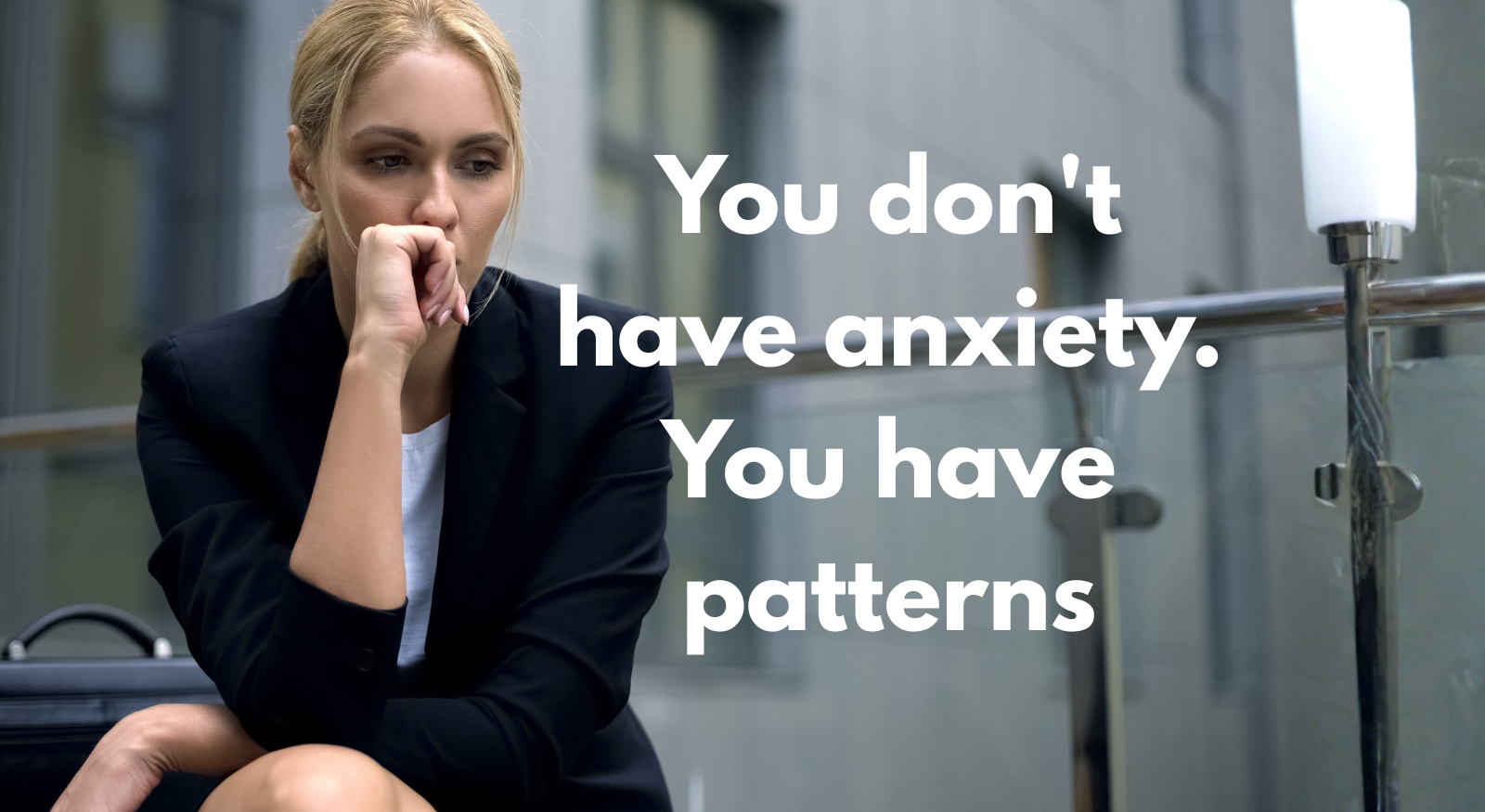
Something feels off. You can't quite put your finger on it, but it's there. A low-level hum of unease that doesn't seem to have a clear cause. You sleep but you don't feel rested. You smile when you're supposed to but your mind is somewhere else entirely. You replay conversations you had three days ago. You feel fine, and then suddenly you don't.
Is this just life? Is this stress? Or is this anxiety?
It's one of the most common questions I hear, and one of the hardest for people to answer on their own. Because anxiety doesn't always look the way people expect it to. It doesn't always show up as a panic attack or a racing heart. Sometimes it's so quiet and so constant that it just becomes the background noise of your life, and somewhere along the way you stopped questioning it.
Let's change that.
What anxiety actually is?
Anxiety is not a character flaw. It's not weakness. It's your nervous system doing exactly what it was designed to do: scan for danger and prepare you to respond to it.
The problem is that for many people, that alarm system gets miscalibrated. It starts firing in situations that aren't actually dangerous. It starts scanning for threats that don't exist. And over time, this state of low-level high alert becomes so familiar that it feels normal, even though it's quietly costing you enormous amounts of energy, sleep and peace of mind.
Anxiety exists on a spectrum. At one end you have the healthy kind: the nerves before a job interview, the alertness before something important. That's your nervous system doing its job. At the other end, you have anxiety that has taken over, that is constant, disproportionate, and getting in the way of living your life.
Most people who wonder whether they have anxiety are somewhere in the middle. And that middle ground is exactly where it's worth paying attention.
The signs most people miss
When people imagine anxiety, they picture panic attacks. Hyperventilating. A crisis that's obvious to everyone. But that's the extreme end. Most anxiety doesn't look like that.
Here's what it actually looks like.
You can't switch off.Even when things are objectively fine, there's a background process running. Reviewing what happened today, anticipating what might go wrong tomorrow, rehearsing conversations that haven't happened yet. You might call this being a thinker, or being conscientious, or just being someone who likes to be prepared. But if your mind has never truly been quiet, that's worth examining.
You're always waiting for the other shoe to drop. Things are going well, but instead of enjoying it you feel vaguely suspicious of it. You keep thinking something is about to go wrong because things have been too good lately. You find it hard to be present in good moments because part of you is already bracing for when they end. This is anticipatory anxiety, and it's exhausting because it means you rarely get to fully experience the good things in your life.
Your body is tense and you didn't notice until now.Take a moment. Are your shoulders up near your ears? Is your jaw tight? Is there a knot in your stomach that has just become part of how you feel? Anxiety lives in the body as much as the mind. Chronic muscle tension, a tight feeling in the chest, headaches that come without obvious cause, stomach issues that come and go. Many people carry physical tension for so long it stops registering as tension. It just becomes normal.
You avoid things, but you always have good reasons.You don't go to the party because you're tired. You cancel the appointment because you're busy. You don't apply for the job because the timing isn't right. Avoidance is one of the most common and least recognised signs of anxiety, because the reasons always sound reasonable. But underneath them is often a nervous system steering you away from anything that might feel threatening, and quietly shrinking your world in the process.
You need to know everything will be okay before you can relax.You Google symptoms. You check in with people to make sure everything's fine between you. You need reassurance before you can commit to something, and even when you get it, the relief doesn't last long. This is the reassurance trap. It feels like relief but it's temporary. It quiets the anxiety briefly before the next wave of "but what if" rolls in.
Sleep is not the restful thing it's supposed to be.You struggle to fall asleep because your mind won't stop. Or you fall asleep easily but wake at 2 or 3am with your thoughts already running. Or you sleep a full eight hours and still feel exhausted because your nervous system never truly powered down.
You feel it in your body before you even know what you're anxious about. A tight chest. A sudden wave of nausea. A feeling of dread that arrives without a clear cause. You're not consciously worrying about anything specific but your body is already responding as if there is something to worry about. This is the nervous system operating below conscious thought, which is exactly why you can't always think your way out of anxiety.
Anxiety versus stress: what's the difference?
People use these words interchangeably, but they're different things and understanding the difference matters.
Stress is a response to a specific external pressure. A deadline, a difficult conversation, a financial crunch. When the pressure lifts, the stress tends to lift with it. Stress is situational.
Anxiety doesn't always have a clear external cause. It can persist even when the stressor is gone. It can show up when things are objectively fine. And you might notice this in yourself: you know things are okay, you know there's no real danger, but the feeling doesn't care what you know. That gap between what you know to be true and how you feel is one of the most reliable signs that anxiety is running the show, not just stress.
Why it often goes unrecognised for years
A few reasons. It builds gradually. Anxiety often creeps up slowly. Each year the baseline shifts a little higher, the worrying becomes a little more constant, the avoidance a little more ingrained. By the time it's significantly affecting your life, it has become so familiar that it feels like just who you are.
It looks like personality. "I'm just a worrier." "I'm naturally anxious." "I'm a perfectionist." These stories often contain a grain of truth. But they can also be a way of explaining away something that's actually treatable.
It doesn't look like the movies. People expect anxiety to be dramatic. When it's quiet and chronic, when it shows up as a low-level restlessness rather than a panic attack, it's easy to dismiss as not serious enough to address.
And there's often a lot of shame around it. Many people feel embarrassed to admit they're struggling, particularly when they can't point to an obvious reason for it.
How anxiety is actually measured
If you've been nodding along to any of the above, you might be wondering how to get a clearer picture of where you actually sit.
The tool GPs and mental health professionals use most widely is called the GAD-7. It's a seven-question questionnaire that measures how often anxiety symptoms have been showing up in the last two weeks, and it places you in one of four categories based on your score out of 21. It's clinically validated, widely used across Australia, and it's the basis for the free anxiety self-test on this website.
Taking it doesn't mean anything is wrong with you. It means you're taking what you're feeling seriously enough to look at it clearly. That's always the right move.
What to do if you think you have anxiety?
The most important thing: you don't have to wait until it gets worse.
That's the biggest mistake I see. People tell themselves they'll do something about it when it gets really bad. But anxious patterns are much easier to shift when you address them early. The longer they run, the more entrenched they become, and the more of your life they quietly take over.
Here's something I want you to understand before you do anything else. You don't have anxiety the way you have a cold. What you have are patterns: patterns of thinking, patterns of nervous system response, patterns of avoidance that have built up over time and are now running on autopilot. That distinction matters, because patterns can be changed. They were learned, which means they can be unlearned.
Start by getting a clear picture. Take the free anxiety test and find out where your score actually lands. Knowing is always better than not knowing.
Talk to your GP. They can rule out physical causes for your symptoms, as thyroid issues, hormonal changes and other conditions can all produce anxious feelings and thoughts.
And if you're ready to actually change the pattern, clinical hypnotherapy works directly with the unconscious processes driving those anxious responses, rather than just teaching you to manage the feelings at the surface. That's why results tend to come faster than with approaches that stay at the conscious level. Most of my clients notice real, meaningful shifts within four to six sessions.
You don't need to be falling apart to deserve support. Feeling consistently on edge, consistently unable to switch off, consistently exhausted by your own mind is enough.
And if you're ready to actually change the pattern, consider clinical hypnotherapy. Unlike talk therapy, which works at the conscious level, clinical hypnotherapy works directly with the unconscious patterns driving your anxiety. That's why it tends to produce results faster. Most of my clients see real, meaningful shifts within four to six sessions.
You don't need to be falling apart to deserve support. Feeling consistently anxious, consistently unable to switch off, consistently exhausted by your own mind is enough.
Find out where your anxiety sits
The free anxiety self-test on this website takes around two minutes. It's based on the GAD-7, the same tool your GP uses, and your personalised results including what your score means and what tends to help at your level are emailed directly to you. Free, confidential, no obligation.
Or if you'd rather just have a conversation first, a free 20-minute discovery call is always available.
This article is for informational purposes only and does not constitute medical advice. If you are experiencing significant distress, please speak with your GP or contact Lifeline on 13 11 14.